Tonga has acceded to the Treaty on the Prohibition of Nuclear Weapons (TPNW), and will be legally bound by it from 5 October 2026.
Accession
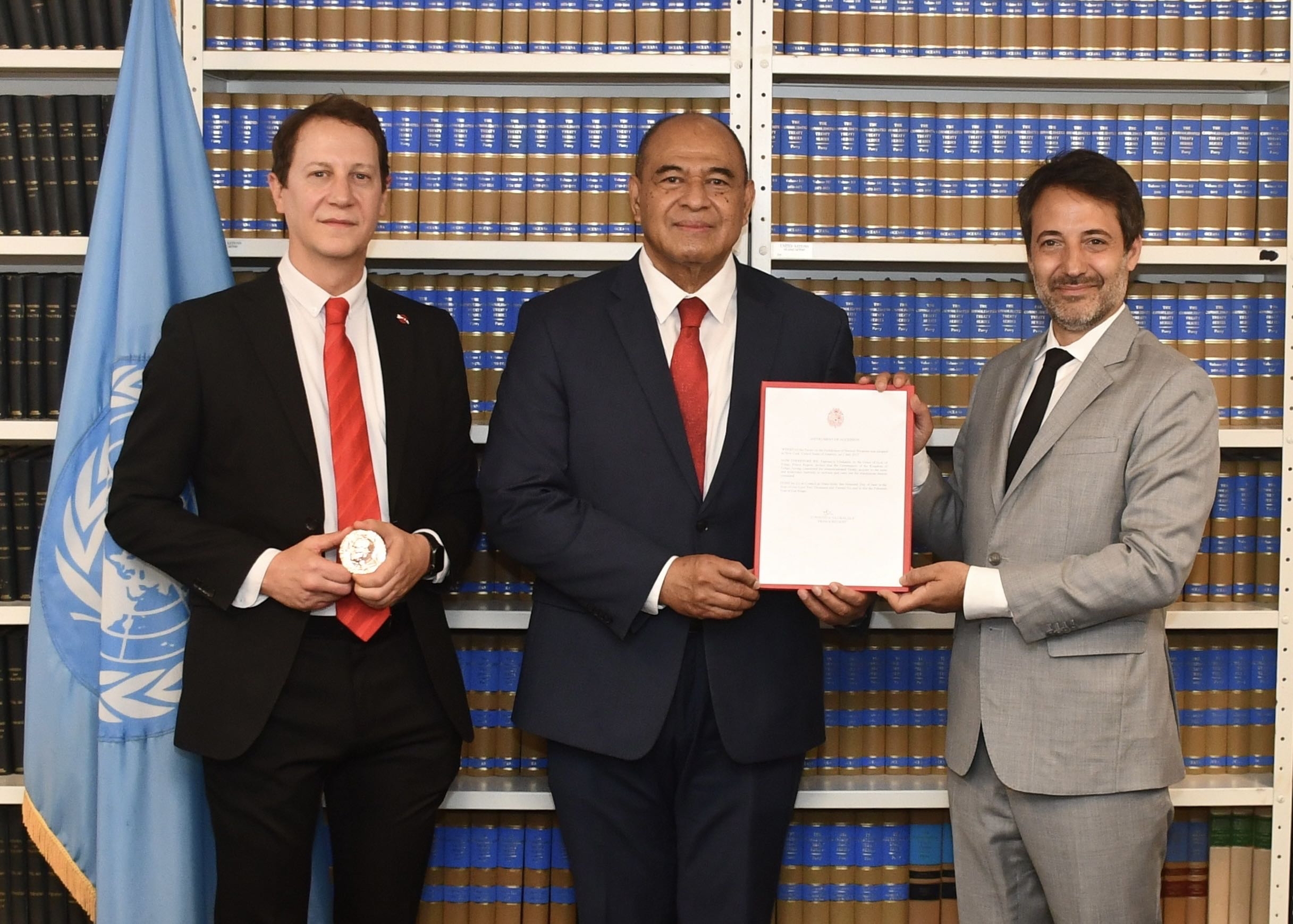
Viliami Vaʼinga Tōnē, the permanent representative of Tonga to the United Nations, deposited Tonga’s instrument of accession with the UN secretary-general on 7 July 2026, the ninth anniversary of the treaty’s adoption.
Tonga became the 75th state party and the 100th state to accept legal obligations under the treaty either as a state party or a signatory. On the same occasion, Tonga also signed and ratified the Comprehensive Nuclear-Test-Ban Treaty of 1996.
Ambassador Tōnē remarked that Tonga’s treaty actions “reflect our deeply held conviction that lasting peace, international security, the protection and sustainable stewardship of our oceans, and the progressive advancement of nuclear disarmament are inextricably linked to the well-being of humanity and to the sustainable future to which we collectively aspire”.
Ambassador Tōnē deposits Tonga’s instrument of accession in 2026.
National position
Since 2024, Tonga has voted in favour of an annual UN General Assembly resolution that welcomes the adoption of the TPNW and calls upon all states to sign, ratify, or accede to it “at the earliest possible date”. From 2020 to 2023, it abstained from voting on the resolution.
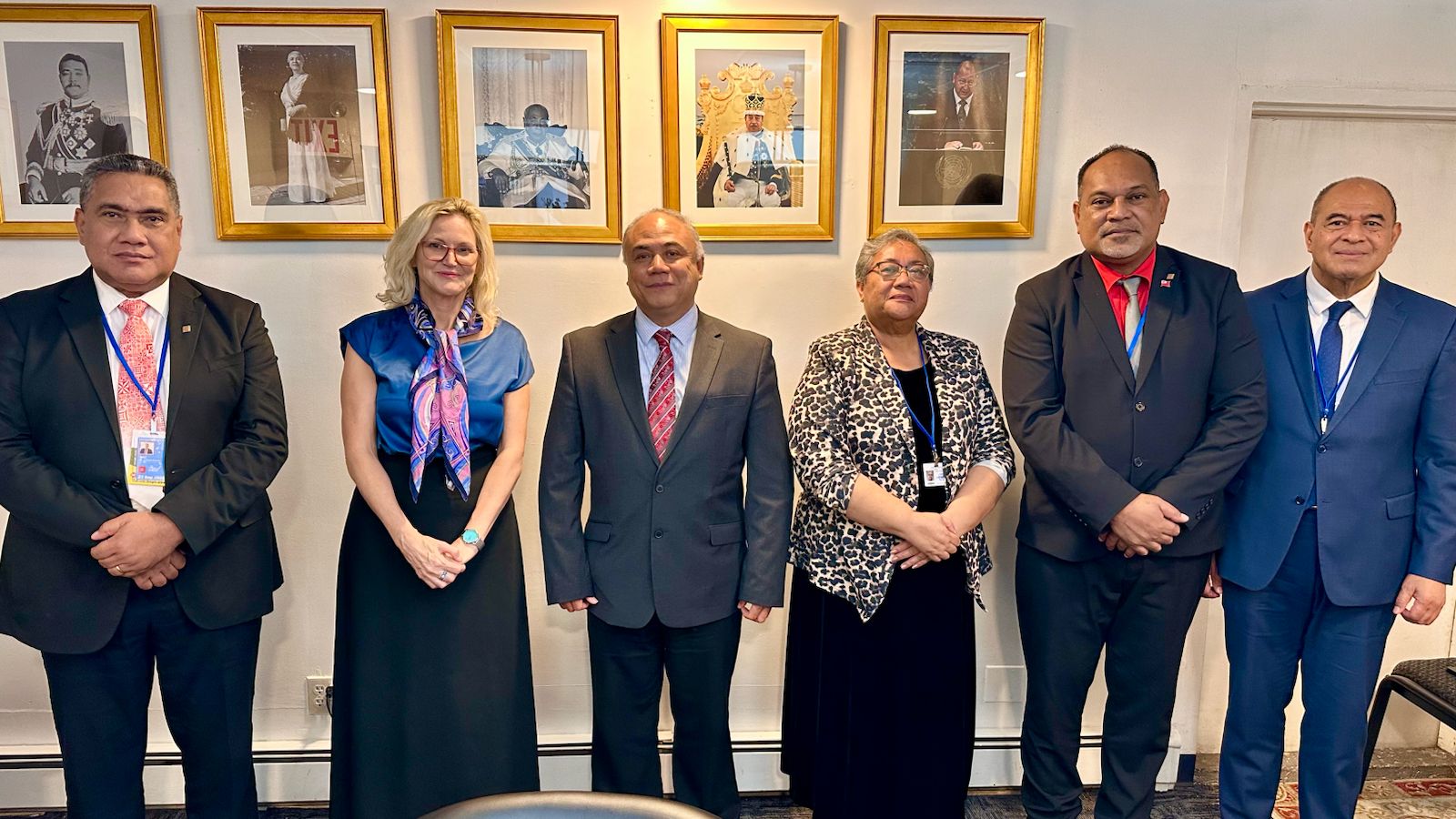
ICAN representatives meet with the then-prime minister of Tonga, ʻAisake Eke (third from left), and other high-level officials in 2025 to discuss the TPNW.
TPNW negotiations
Tonga participated in the negotiation of the TPNW at the United Nations in New York in 2017 and was among 122 states that voted in favour of its adoption.
Before the negotiations
In 2016, Tonga voted in favour of the UN General Assembly resolution that established the formal mandate for states to commence negotiations on “a legally binding instrument to prohibit nuclear weapons, leading towards their total elimination”.
Prior to the adoption of the TPNW in 2017, nuclear weapons were the only weapons of mass destruction not subject to a comprehensive, globally applicable treaty prohibition. Tonga supported calls in the UN General Assembly to fill this “legal gap”.




 Tonga
Tonga