Nauru

Nuclear-weapon-free state

Has joined the TPNW

SIGNED

22 November 2019

RATIFIED

23 October 2020

IN FORCE

22 January 2021


Status

Nauru has signed and ratified the Treaty on the Prohibition of Nuclear Weapons (TPNW). It was among the original 50 states parties to the treaty when it entered into force on 22 January 2021.


Signature and ratification

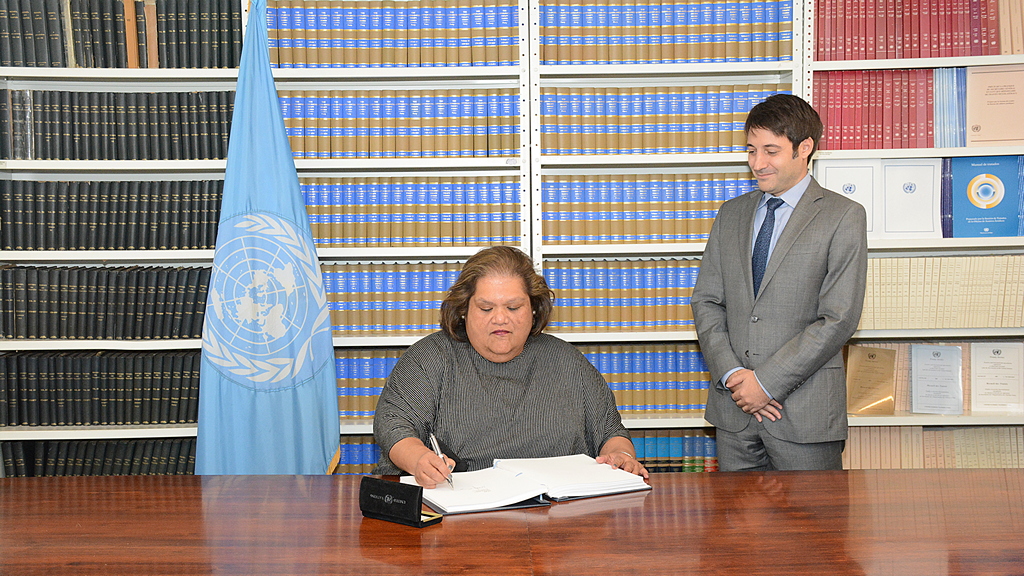
Marlene Moses, the then-permanent representative of Nauru to the United Nations, signed the TPNW in New York on 22 November 2019. Nauru deposited its instrument of ratification with the UN secretary-general on 23 October 2020.

In a statement delivered on the occasion of its ratification, Nauru said that it “supports and recognises the important role the treaty plays in achieving its goal towards total elimination of nuclear weapons”. It called on “other countries to complete all steps for treaty ratification as soon as possible”.

Nauru was the equal 48th state to ratify or accede to the TPNW.

Ambassador Marlene Moses of Nauru signs the TPNW in 2019. Photo: UNOLA


Implementation

In accordance with Article 2 of the TPNW, Nauru submitted a declaration to the UN secretary-general on 19 February 2021 confirming that it does not own, possess, or control nuclear weapons, has never done so, and does not host any other state’s nuclear weapons on its territory.

As required by Article 3, Nauru has a comprehensive safeguards agreement in force with the International Atomic Energy Agency to guard against the misuse of nuclear facilities and materials.

Per Article 12, Nauru has promoted universal adherence to the TPNW, including by co-sponsoring and voting in favour of an annual UN General Assembly resolution that calls upon all states to sign, ratify, or accede to the treaty “at the earliest possible date”.

In 2022, Nauru encouraged “those [UN] member states who have yet to ratify the TPNW to do so, so we are united in the global goal for a peaceful and just world free of nuclear weapons”.


Meetings of states parties

Nauru participated in the second meeting of states parties to the TPNW in 2023, where it reaffirmed its “unwavering dedication to the collective pursuit of a world free of nuclear weapons”.

It noted the long history of support for nuclear disarmament in the Pacific, “borne of our region’s direct experience of nuclear testing by colonial powers, the catastrophic humanitarian and environmental consequences of which still reverberate today, serving as a reminder of the urgency of our collective task”.


TPNW negotiations

Nauru participated in the negotiation of the TPNW at the United Nations in New York in 2017 but was absent for the vote on its adoption.

In 2016, Nauru co-sponsored the UN General Assembly resolution that established the formal mandate for states to commence negotiations on “a legally binding instrument to prohibit nuclear weapons, leading towards their total elimination”.


Before the negotiations

Nauru was among 127 states that endorsed a “humanitarian pledge” in 2015–16 to cooperate “in efforts to stigmatise, prohibit, and eliminate nuclear weapons”. The pledge was instrumental in building momentum and support for convening the TPNW negotiations.

Nauru, together with Fiji, Palau, Samoa, and Tuvalu, submitted a working paper to a UN working group in Geneva in 2016 in which it argued that “the debate should no longer be about whether a global ban on nuclear weapons is necessary, but rather how we can achieve it and what provisions it should contain”.

The five Pacific island states commented that the lived experience of nuclear weapons in the Pacific, where more than 300 atomic and hydrogen bombs were tested, has motivated them to work for a treaty-based ban.


Further information

Nuclear Weapons Ban Monitor

Nuclear-weapon-free state

Has joined the TPNW

[HIGHLIGHTS]

SIGNED

22 November 2019

RATIFIED

23 October 2020

IN FORCE

22 January 2021


Status

Nauru has signed and ratified the Treaty on the Prohibition of Nuclear Weapons (TPNW). It was among the original 50 states parties to the treaty when it entered into force on 22 January 2021.


Signature and ratification

Marlene Moses, the then-permanent representative of Nauru to the United Nations, signed the TPNW in New York on 22 November 2019. Nauru deposited its instrument of ratification with the UN secretary-general on 23 October 2020.

In a statement delivered on the occasion of its ratification, Nauru said that it “supports and recognises the important role the treaty plays in achieving its goal towards total elimination of nuclear weapons”. It called on “other countries to complete all steps for treaty ratification as soon as possible”.

Nauru was the equal 48th state to ratify or accede to the TPNW.

Ambassador Marlene Moses of Nauru signs the TPNW in 2019. Photo: UNOLA


Implementation

In accordance with Article 2 of the TPNW, Nauru submitted a declaration to the UN secretary-general on 19 February 2021 confirming that it does not own, possess, or control nuclear weapons, has never done so, and does not host any other state’s nuclear weapons on its territory.

As required by Article 3, Nauru has a comprehensive safeguards agreement in force with the International Atomic Energy Agency to guard against the misuse of nuclear facilities and materials.

Per Article 12, Nauru has promoted universal adherence to the TPNW, including by co-sponsoring and voting in favour of an annual UN General Assembly resolution that calls upon all states to sign, ratify, or accede to the treaty “at the earliest possible date”.

In 2022, Nauru encouraged “those [UN] member states who have yet to ratify the TPNW to do so, so we are united in the global goal for a peaceful and just world free of nuclear weapons”.


Meetings of states parties

Nauru participated in the second meeting of states parties to the TPNW in 2023, where it reaffirmed its “unwavering dedication to the collective pursuit of a world free of nuclear weapons”.

It noted the long history of support for nuclear disarmament in the Pacific, “borne of our region’s direct experience of nuclear testing by colonial powers, the catastrophic humanitarian and environmental consequences of which still reverberate today, serving as a reminder of the urgency of our collective task”.


TPNW negotiations

Nauru participated in the negotiation of the TPNW at the United Nations in New York in 2017 but was absent for the vote on its adoption.

In 2016, Nauru co-sponsored the UN General Assembly resolution that established the formal mandate for states to commence negotiations on “a legally binding instrument to prohibit nuclear weapons, leading towards their total elimination”.


Before the negotiations

Nauru was among 127 states that endorsed a “humanitarian pledge” in 2015–16 to cooperate “in efforts to stigmatise, prohibit, and eliminate nuclear weapons”. The pledge was instrumental in building momentum and support for convening the TPNW negotiations.

Nauru, together with Fiji, Palau, Samoa, and Tuvalu, submitted a working paper to a UN working group in Geneva in 2016 in which it argued that “the debate should no longer be about whether a global ban on nuclear weapons is necessary, but rather how we can achieve it and what provisions it should contain”.

The five Pacific island states commented that the lived experience of nuclear weapons in the Pacific, where more than 300 atomic and hydrogen bombs were tested, has motivated them to work for a treaty-based ban.


Further information

Nuclear Weapons Ban Monitor

[PARTNERS]

[LOCALSUPPORT]