




While some governments turn a blind eye to a growing nuclear ban treaty, cities are speaking up. From Paris to Athens, over 1,000 communities are challenging national leaders to choose safety over annihilation — and they’re winning allies fast.
While some governments turn a blind eye to the growing nuclear ban treaty, cities are speaking up. From Paris to Athens, over 1,000 communities are challenging national leaders to choose safety over annihilation — and they’re winning allies fast.
In 2017, a historic step was taken: the United Nations adopted the Treaty on the Prohibition of Nuclear Weapons (TPNW), made possible by the tireless work of diplomats and civil society. As of August 2024, 94 countries have signed the treaty, 73 have ratified it, and 4 more have formally adhered. Altogether, half of the world’s nations are now part of the treaty — and that number is expected to grow.
But the journey is far from over. There is a small group of countries — those complicit in nuclear weapons — where national governments are very slow, or outright resistant, to engage with the TPNW at all. Even where governments try to ignore the fact that the treaty exists (despite it growing and redefining international norms about possession of nuclear weapons), our campaign is loud.
One prominent example of the campaigning efforts is the Cities Appeal, a strategic effort to rally local municipalities and cities to pressure national leaders to support the TPNW.
The idea is simple: bring as many cities as possible into the movement and show national governments that their capital cities and citizens demand they join the TPNW. With the incredible support of our partner organisations across the globe, the Cities Appeal has already inspired more than 1,000 cities to call out their government’s failure to protect their citizens from a potential nuclear attack. Each city joining the appeal is a powerful grassroots voice for disarmament, safety, and peace.
Why are cities important ?
In the event of a nuclear attack, cities are responsible for rescue efforts — a task impossible if all infrastructure, medical institutions, and means of communication are destroyed. Such an attack would have devastating effects, not only on military infrastructure but, above all, on the civilian population — leaving devastation, death, and deep and lasting psychological scars.
Through the Cities Appeal, these cities are empowered to act locally on global issues such as nuclear disarmament, to stand up to their national governments, and to demand action. As we have just commemorated the 80th anniversaries of the US bombings of Hiroshima and Nagasaki, the images of those two totally obliterated cities serve as reminders of what nuclear weapons do to lives.
Especially now, with nuclear-armed countries engaging in a new arms race, developing nuclear weapons with explosive yields many times more powerful than those dropped over Hiroshima and Nagasaki, it is more important than ever to remember that no city can be protected from the impacts of nuclear weapons.
Paris supports the TPNW
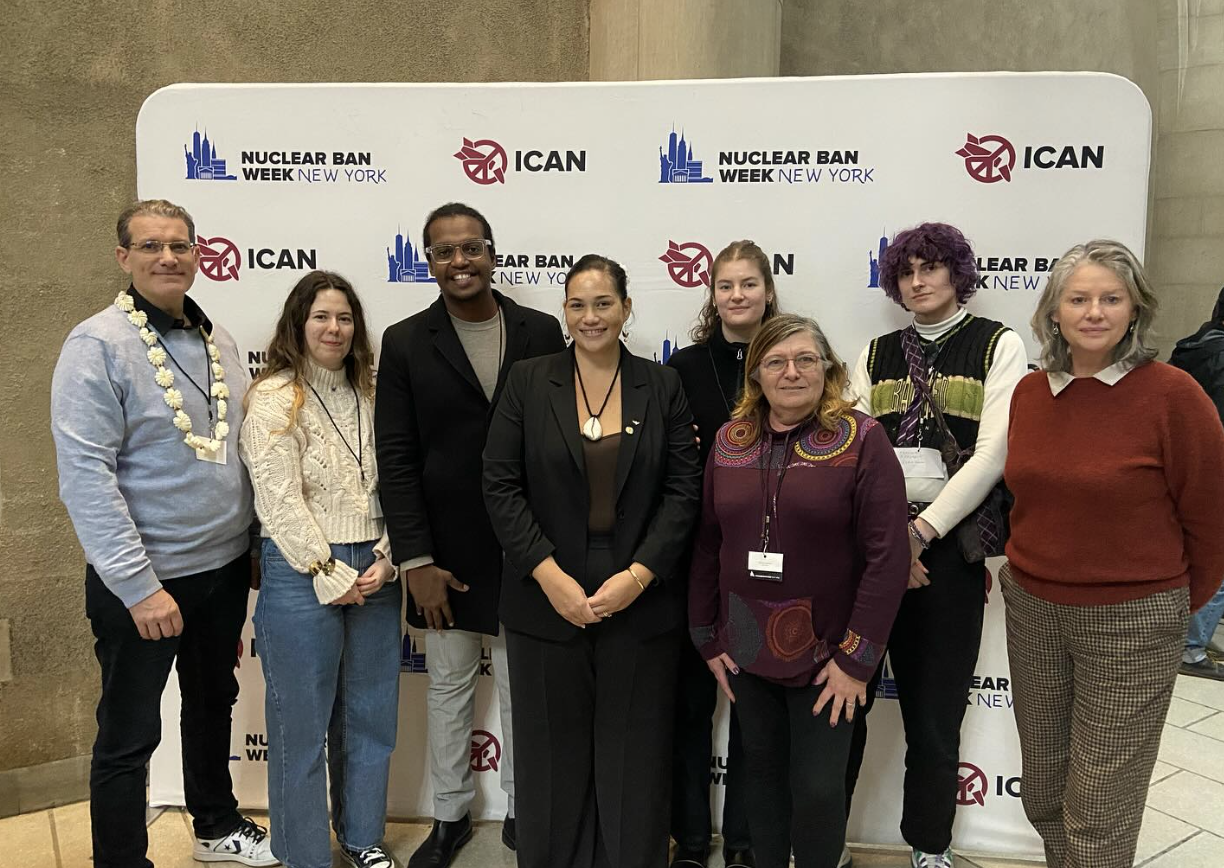
ICAN France Team
Among the many cities in support of the TPNW are a growing number of national capitals, including Washington D.C., Ottawa, Rome, Athens, Amsterdam, Berlin, and others.
Prominently, the French capital, Paris, supports the TPNW — alongside Marseille, Lyon, and almost 100 other cities. As Jean-Marie Collin, Director of ICAN France, explains the significance: “98 signatures from French cities (including Paris) and local authorities reflect a clear awareness of the catastrophic humanitarian consequences that the use of such weapons would entail.” He adds that by promoting the Cities Appeal, “we can exert real pressure on French diplomacy.”
Athens joins the movement for a nuclear-free world
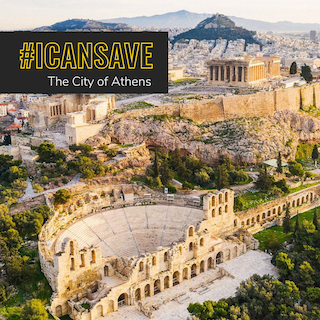
When Athens, the birthplace of European democracy, joined the Appeal, it became the 12th capital to do so. In just three years, 93 municipalities across Greece added their names, representing 3.5 million citizens — more than one third of the country’s population.
For Nikos Stergiou of the Greek branch of World without War or Violence, one of ICAN’s Greek partner organisations, the campaign is much more than numbers: it’s “a legacy that continues to inspire us, and re-ignites the transcendent idea of a nuclear-free world.”
In the end, real leadership doesn’t always come from the top — it rises from the cities, the communities, and the people who see nuclear weapons as a threat. The growing support for the ICAN Cities Appeal, especially in countries where the national government is trying to ignore the TPNW, shows that leadership.
See the full list of cities that have taken the ICAN cities appeal