








On November 25, an inaugural meeting of the newly-established cross-party study group on nuclear disarmament was held in Tokyo, Japan. Having this group is one of the most remarkable achievements in recent years for the Japanese civil society, which has persistently engaged with its lawmakers.
By Hideo Asano, Coordinator, Japan Campaign to Abolish Nuclear Weapons
The group was launched with the membership of 22 Japanese Diet members from 8 parties (as of November 2025), including both the ruling and opposition parties. It will operate for a year, until November 2026, conducting monthly study sessions on nuclear disarmament issues such as the Treaty on the Prohibition of Nuclear Weapons (TPNW), the Nuclear Nonproliferation Treaty (NPT) and Japanese nuclear policies. Akira Kawasaki from Peace Boat, an ICAN partner organisation, and Hideo Asano from the Japan Campaign to Abolish Nuclear Weapons serve as advisers to the group.
Establishing this group was possible thanks to tireless efforts by Japanese citizens and lawmakers. There were four key developments that made this happen.
-
Continued engagement with Diet members: Annual cross-party roundtables
Since 2018, the Japan NGO Network for Nuclear Weapons Abolition (a coalition of 45 Japanese NGOs and individuals) has held annual cross-party roundtables on August 5th in Hiroshima, a day before the Hiroshima Peace Memorial Ceremony. They are often attended by high-level figures of each party to exchange views on Japanese policies on nuclear disarmament.
Continuing in this framework has allowed Diet members to appreciate the value of suprapartisan dialogue on nuclear disarmament issues.
-
Growing public support for the TPNW: 2024 Nobel Peace Prize to Nihon Hidankyo
In December 2024, the Nobel Peace Prize was awarded to Nihon Hidankyo. The Hibakusha’s long-dedicated, unprecedented work to share their testimonies and achieve a world free of nuclear weapons was internationally recognized. People all over Japan celebrated the Prize. A lot of media featured the hibakusha’s fight against nuclear weapons.
On February 8th and 9th, 2025, the Japan Campaign organized the “International Civil Society Forum to Abolish Nuclear Weapons” in Tokyo. This two-day forum attained a total of about 900 participants from both Japan and abroad, successfully creating momentum to kick off the year marking the 80th remembrance of the atomic bombings in Hiroshima and Nagasaki. On the following day, a roundtable session with Japanese Diet members and international experts was also held to share policy recommendations discussed in the Forum.
Public support for the nuclear ban treaty grew accordingly. In Asahi Shimbun’s survey in April 2025, 73% responded they support Japan joining the TPNW.
These developments encouraged Japanese lawmakers to show further political leadership for nuclear disarmament, especially exploring the way Japan engages with the nuclear ban treaty.
-
Empowering lawmakers: Observing the Third Meeting of States Parties
While then prime minister Shigeru Ishiba had said in December 2024 that his government would “seriously consider”observing the Third Meeting of States Parties to the TPNW (3MSP), Tokyo announced it would not do so in February 2025. From Japan, along with civil society delegates, six Diet members traveled to New York to attend the Meeting, participating in ICAN’s parliamentarians forum and observing deliberations at UN headquarters.
After witnessing the global energy and urgent calls for nuclear abolition, as well as listening to the voices of global hibakusha first hand, these Japanese lawmakers were significantly empowered , and promised follow-up actions after returning to Japan. This way, the idea of launching a new cross-party group in Japan started to float among them. (These Diet members later became directors and secretary of the cross-party group.)
-
Clear demand from the civil society to back political leadership
On August 5th, the Japan NGO Network and the Japan Campaign co-hosted an annual roundtable discussion in Hiroshima that marked the 80th year since the atomic bombings. After the roundtable, the lawmakers who observed the 3MSP accelerated the process of establishing a cross-party group - they began serious consultations, including with other Diet members, especially those in the ruling parties.
The Japan Campaign has continuously followed up on the progress with the Diet members. In parallel, on October 9th, Nihon Hidankyo had a meeting with lawmakers of the ruling and opposition parties to request the establishment of a suprapartisan framework on nuclear abolition and victim compensation. This hibakusha’s call solidified the political process to launch a cross-party group, which finally became a reality on November 25th.
The group’s first meeting ended with great success. Akira Kawasaki briefed participants about the outcomes of the 3MSP and discussed how Japan can be a leader on nuclear disarmament as we approach NPT and TPNW review conferences in 2026.
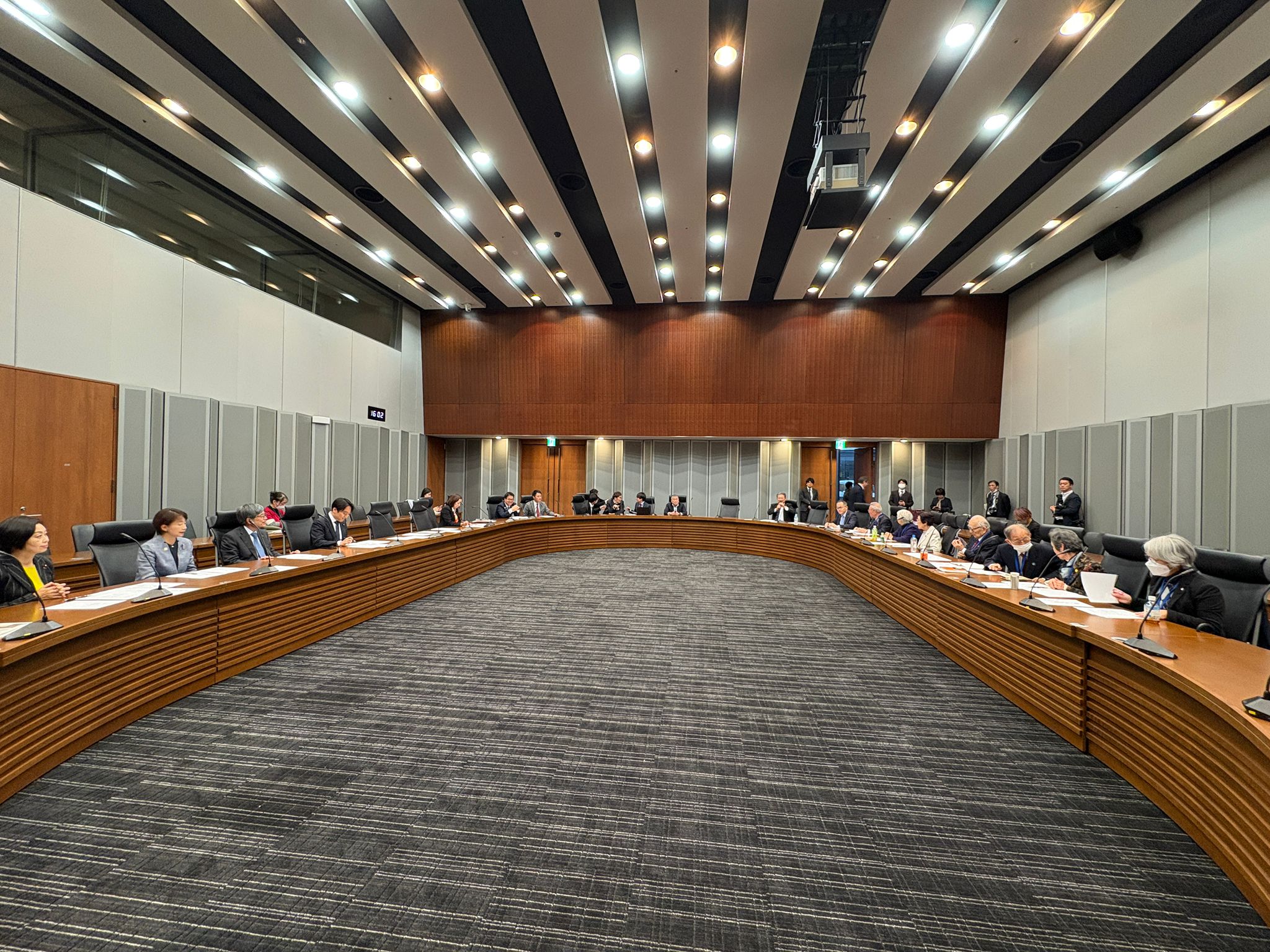
The meeting was also attended by representatives from Nihon Hidankyo. Its co-chair Terumi Tanaka expressed his expectation to the group by stating that “I hope discussions in the group will lead to informing the government”.
At the same time, at national Diet sessions, the new Japanese Prime Minister Sanae Takaichi has avoided articulating her government’s future commitment to Japan’s Three Non-Nuclear Principles. This has caused growing concern that the Principles may be revised in the future, leading to repeated calls to uphold them from across Japan as well as abroad.
This issue was raised in the group’s meeting. Minoru Terada, a lawmaker of the ruling Liberal Democratic Party elected from a Hiroshima district, stressed that “the Three Non-Nuclear Principles should be upheld”.
Terumi Tanaka also argued that by signing and ratifying the TPNW, Japan can make the three Principles legal commitments - therefore, Japan should join the nuclear ban treaty.