








Athens is the latest capital city in Europe to join the ICAN City Appeal, along with 92 other Greek municipalities who have called on the government to join the Treaty on the Prohibition of Nuclear Weapons (TPNW).
In just three years, 93 municipalities across Greece added their names, representing 3.5 million citizens, more than one third of the national population. For Nikos Stergiou of the Greek branch of World without War or Violence, one of ICAN’s partner organisations, the campaign is much more than numbers: it’s “a legacy that continues to inspire us, and re-ignites the transcendent idea of a nuclear-free world.”
ICAN in Athens
This week, ICAN’s Executive Director Melissa Parke is in Athens to meet with the Mayor, campaigners like Nikos, and party leaders from across the political spectrum. She is bringing the message that the TPNW is a tool for peace, and that there is a significant and growing movement across the country rejecting nuclear weapons and policies, like nuclear deterrence, which enable or encourage their use.
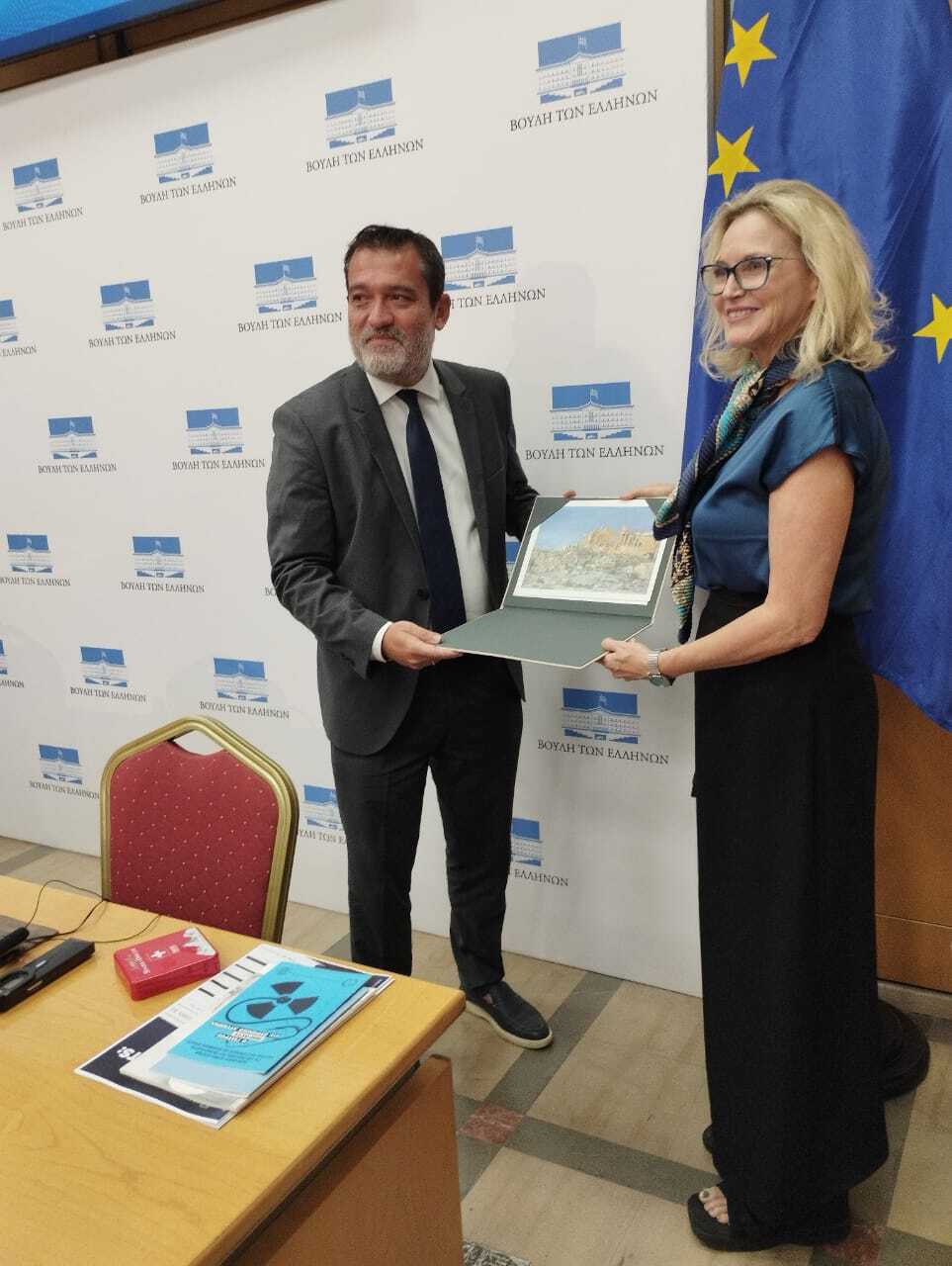
ICAN Executive Director Melissa Parke meeting Mr Livanos, MP of Nea Dimokratia party, representative of the Presidency of the Parliament.
Greece & nuclear weapons
During the cold war, Greece hosted US nuclear weapons on its territory as part of a NATO nuclear-sharing agreement. The United States removed the last of these weapons in 2001, according to the Natural Resources Defense Council. However, Greece still maintains the capacity to provide support for nuclear weapons operations, though in a reserve role. Not long ago, Greek leaders recognised nuclear weapons in Europe are meant to be used in Europe, and chose to negotiate their removal from Greek territory.
Greek cities support the Nuclear Ban
The 93 cities calling for the country to join the TPNW represent 35% of the population, and are demanding that the country do more for their safety and security, by ending Greece’s involvement in any activities related to nuclear weapons through the TPNW.
Cities are demanding this action because in case of a nuclear attack, they are responsible for providing help and support to victims. It is well documented that no country or city has the infrastructure necessary to deal with a nuclear attack in which a majority of medical institutions and means of communications would likely be destroyed.
In the end, real leadership doesn’t always come from the top, it rises from the cities, the communities, and the people who see nuclear weapons as a problem, and one that can be solved. The growing support for the TPNW, especially in countries where the national government is trying to ignore it, are a demonstration of grassroots leadership to solve the nuclear weapons problem once and for all.