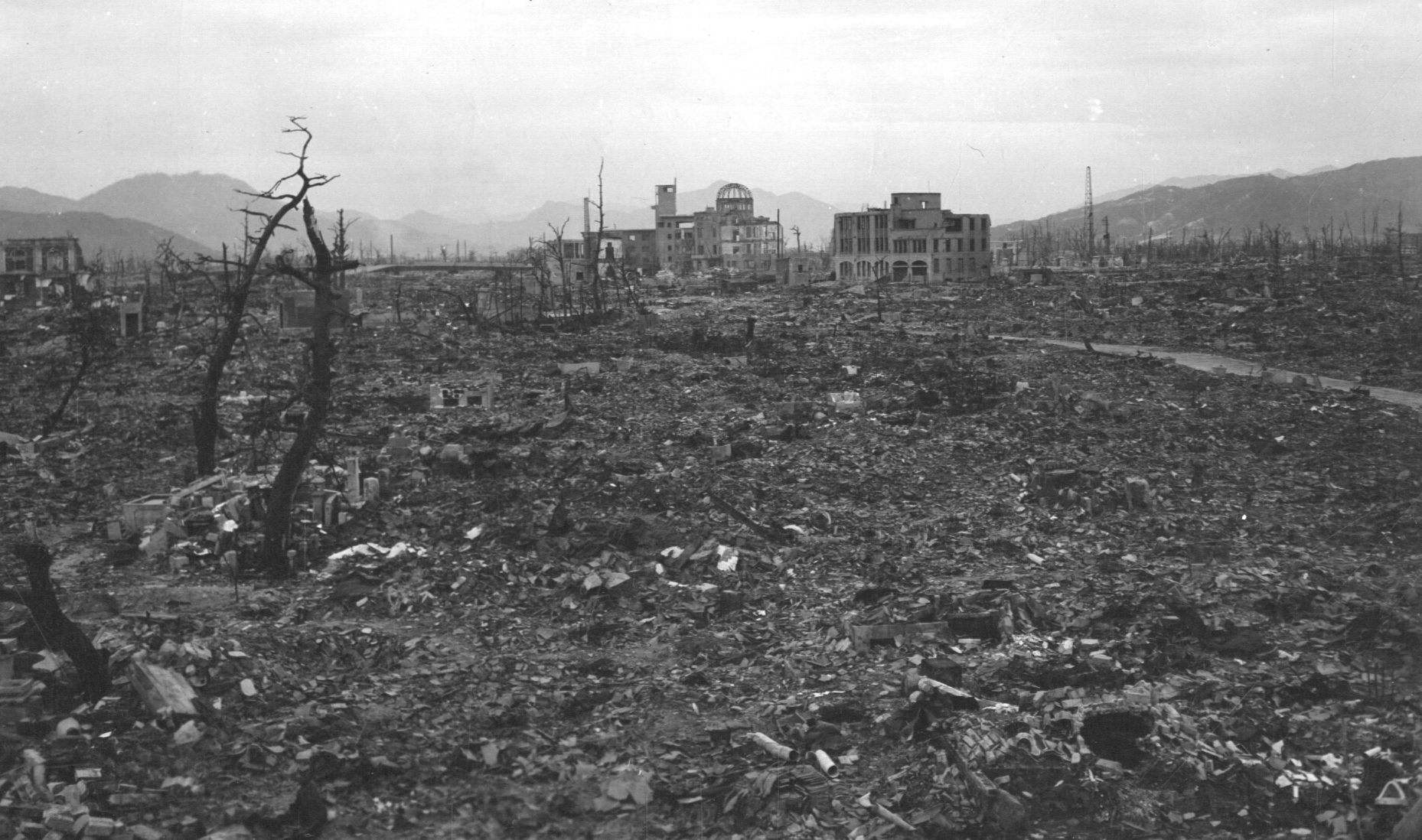





Hiroshima and Nagasaki
More than a quarter of a million people were killed when the United States dropped two relatively small nuclear bombs on the Japanese cities of Hiroshima and Nagasaki in August 1945 – the first and only use of nuclear weapons in war.
Many were instantly incinerated. Others died in agony hours, days or weeks after the attacks from severe burns, blast injuries and acute radiation sickness. Countless more died years later from radiation-related cancers and other illnesses.
To prevent a recurrence of such atrocities, nations must act with urgency to eliminate nuclear weapons.
In Hiroshima and Nagasaki, the scenes of devastation were apocalyptic: Schoolyards scattered with dead and dying children. Mothers cradling their lifeless babies. People with their intestines hanging out and strips of skin dangling from their limbs.
Most victims died without any care to ease their suffering, as few hospitals remained standing, medical supplies had been destroyed, and most doctors and nurses had been killed or injured. Those who entered the cities in the aftermath to render assistance risked their own lives because of residual radiation.
The vast majority of the victims – over 90 per cent – were civilians, including an estimated 38,000 children. At the time of the attack on Hiroshima, approximately 8,400 junior high school students were outdoors creating firebreaks as a civil defence measure; 6,300 of them were killed.