








Representatives from across the Pacific are gathering in Fiji this week to address the enduring harm of nuclear testing and strengthen regional efforts for nuclear justice, healing and disarmament.
Over the course of half a century, from 1946 to 1996, the United States, Britain and France conducted more than 300 nuclear tests in Australia and the Pacific, with devastating long-term consequences for public health and the environment. This week, representatives from across the region are meeting in Suva, Fiji, to reflect on the legacy of these toxic experiments and “to strengthen collective pathways towards healing, justice and a nuclear-free ocean of peace”.
The dialogue – “From Testing Ground to Healing Grounds: Advancing an Ocean of Peace” – is being hosted by the government of Fiji and the Fiji Nuclear Veterans and Families Association from 28 to 30 October, with the support of the International Campaign to Abolish Nuclear Weapons (ICAN), ICAN Australia and the Nuclear Truth Project. Participants include government officials, survivors of nuclear testing and representatives of civil society.
“The Pacific carries interconnected legacies of nuclear weapons testing, military participation and radioactive harm,” said Mere Tuilau, one of the organisers, who represents Fijian nuclear test veterans. “Affected peoples in Fiji, Kiribati, the Republic of the Marshall Islands, Māòhi Nui (French Polynesia), Australia, Aotearoa New Zealand and elsewhere continue to experience health, environmental, cultural, social and intergenerational consequences. Their lived experience, knowledge and priorities must guide responses to this legacy.”
Victim assistance and environmental remediation
The focus of the dialogue is on the need to implement articles 6 and 7 of the UN Treaty on the Prohibition of Nuclear Weapons (TPNW), which establish obligations to assist victims of the use and testing of nuclear weapons and to take steps towards the remediation of sites contaminated by these activities. The TPNW was negotiated in 2017 and entered into force in 2021. To date, 101 states have signed, ratified or acceded to it, including 12 states in the Pacific region: Cook Islands, Fiji, Kiribati, Naoero, New Zealand, Niue, Palau, Samoa, Solomon Islands, Tonga, Tuvalu and Vanuatu.
The outcomes of the dialogue will be presented to the first review conference of the TPNW, scheduled to take place in New York from 30 November to 4 December. The TPNW is the only globally applicable treaty to prohibit nuclear weapons outright and to establish frameworks for verifiably eliminating nuclear weapons and for assisting victims of their use and testing.

A demonstration in Suva, Fiji, in support of the TPNW in 2020. Photo: Youngsolwara
Harm to Fijians from British nuclear testing
From 1957 to 1958, Fijian soldiers participated in the nine British nuclear test explosions at Malden and Kiritimati (Christmas) Islands in the Pacific, now part of the Republic of Kiribati. Their health was adversely affected by exposure to ionizing radiation. The Fijian government has spoken of the “tragic health circumstances” of its citizens who participated in these tests, and in 2015 it announced one-off grants to support them and their families, while emphasising the continued need for proper compensation from the British government.
Fiji has long been a strong supporter of efforts to end nuclear testing and eliminate nuclear weapons. When it ratified the TPNW in 2020, it said: “Pacific islanders continue to be exposed to nuclear radiation. Nuclear explosions, we know very well, do not observe national borders, they don’t respect visa regimes, nor does nuclear waste respect time – it remains for generations.”
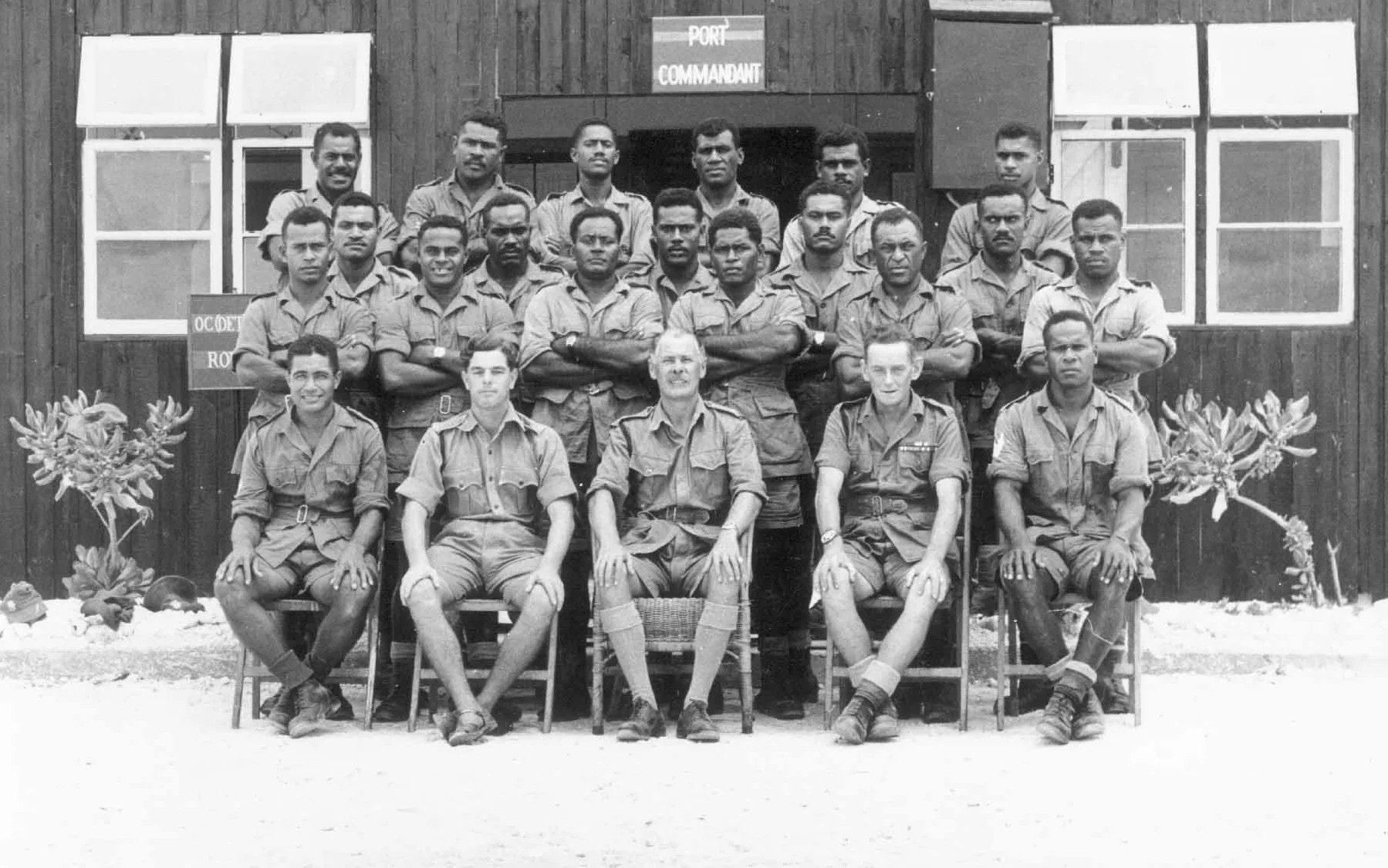
Fijian troops on Kiritimati Island during the period of British nuclear testing. (Photo Loata Masi)
Message from ICAN’s executive director
In a video message to the dialogue this week, ICAN’s executive director, Melissa Parke, noted that the decisions to conduct nuclear tests in the Pacific and Australia were made by distant governments who had scant regard for the welfare of local populations or test site workers. “These governments did not represent Pacific islanders, nor the Indigenous Australians on whose traditional lands they tested their weapons of terror,” she said. “They have never apologised for their harmful acts or been held to account.”
Pacific island states played a leading role in the negotiation of the TPNW in 2017, she said, in particular in shaping the treaty’s robust provisions to address the toxic legacy of nuclear testing. The highlighted the fact that, of the 50 states that facilitated the treaty’s entry into force in 2021, 10 were from the Pacific region, describing this as “an extraordinary contribution – one that I hope will inspire you in the days ahead as you discuss our ongoing collective efforts, as governments and civil society, to ensure that this ambitious treaty achieves its dual goals: nuclear disarmament and nuclear justice.”